
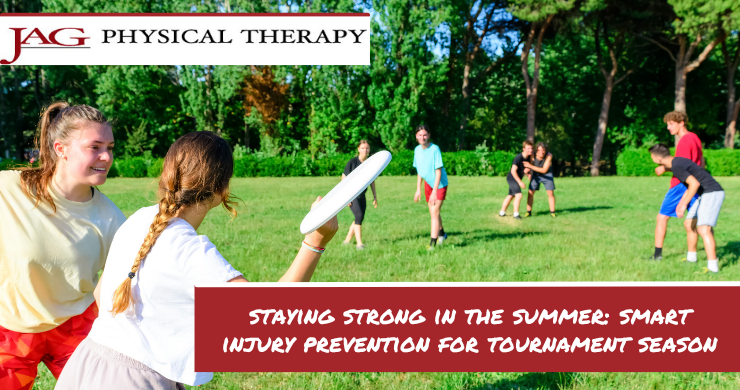
STAYING STRONG IN THE SUMMER: SMART INJURY PREVENTION FOR TOURNAMENT SEASON
- Focus: Balancing intensity, common injuries during summer, and strategies for staying healthy on the road.
Summer tournament season is one of the highlights of the year for young athletes. It’s a time full of travel, competition, and opportunities to shine. But with intense schedules, high temperatures, and unfamiliar environments, it’s also a time when injuries can easily occur if players aren’t careful or prepared. Staying healthy on the road means balancing intensity, understanding common risks, and following smart strategies to stay strong throughout the season.
Balancing Intensity: Train Smarter, Not Just Harder
One of the biggest challenges during summer tournaments is managing energy and workload. With multiple games in a short span, players can easily overdo it if they push too hard without proper recovery. To stay in top form:
- Prioritize quality over quantity during practices and warmups. Focus on sharp, purposeful movements rather than long, draining sessions.
- Use dynamic warm-ups before games to prepare muscles and joints for explosive movements. Skip static stretching before games, it’s better suited for post-game recovery.
- Listen to your body – mild soreness is normal; sharp pain is not. Players should speak up early if something doesn’t feel right.
Common Injuries During Summer Play
You may see a trend in injuries during the high-pressure environment of summer tournaments. Muscle strains, particularly in the hamstrings and groin, are commonly seen due to the quick sprints and directional changes that soccer demands. Ankle sprains are also an injury seen throughout the season, even more so during tournaments, since an athlete might not be familiar with the playing surface, and dry or uneven fields can cause someone to lose their footing more easily.
Overuse injuries such as tendinitis in the knees or hips are also seen and can develop with back-to-back games, especially when recovery time is limited. It is important to recognize early signs of trouble, such as persistent soreness, decreased speed, or unusual fatigue. Knowing the warning signs can make the difference between a simple adjustment and being sidelined.
In addition to orthopedic injuries, heat-related illnesses such as dehydration and heat exhaustion, become bigger threats in the hot summer sun. It is important to know the early signs and symptoms of these illnesses and understand how to avoid them such as drinking plenty of water and electrolytes before, during, and after play.
What Are the Best Exercises to Prevent Soccer Injuries?
A good soccer player needs many qualities – not just speed and adept ball-handling, but agility for quick movements, strength to effectively tackle and create pressure, as well as other skills. Players inherently risk various kinds of injury with a physically demanding game like soccer.
The following four exercises are commonly used to help prevent injuries in soccer and will help condition the body for play. Each of the following exercises target one or both of two important purposes: increasing lower body flexibility and building the core muscles.
Lunges with Twists
This variant on the basic, fundamental lunge, adds one movement (a twist) for a host of benefits including increasing balance, core flexibility, and a deeper hip stretch. The movement involves stepping forward with one foot, making a right angle with the front knee while extending the back leg while lowering the body. During the lower movement, incorporate a twist at the torso towards the side of the leg that is forward. During the movement, it is important to squeeze the core muscles while keeping the knees in the same position. To complete the movement, rotate the torso back to center, step out of the lunge, and repeat with the other leg.
Single-Leg Deadlifts
A challenging bodyweight exercise, single-leg deadlifts simultaneously work on the hamstrings and glutes, which is ideal for preventing thigh and knee injuries. To do this exercise, stand with the feet hip-width apart and shift most weight onto one foot while slightly bending the knee of that leg. Thrust the other leg backward as you lean forward, arms reaching out, until the upper body and back leg are parallel to the floor – similar to Warrior III pose in yoga. To return to standing, raise the chest at the same time the back leg lowers to the starting position. Repeat on the other leg.
Side Lunges
You may also know side lunges as lateral lunges. Under any name, this exercise is a simple way to train faster lateral movement as well as fortify the knees and hips against injury. Moreover, this is an effective way to build balance. Starting with the feet hip-width apart, step widely to one side, keeping the toes of both feet facing forward and soles flat. During the step, bend the knee and push the hips back as if you were to take a seat.(Return to center by pushing with the active foot, then switch and repeat.
READ MORE ABOUT EXERCISES
TO PREVENT SOCCER INJURIES
Staying Healthy on the Road
Tournament travel presents its own set of challenges, from long car rides to inconsistent meal options and less-than-ideal sleeping environments. Athletes need to stay hydrated, eat properly, and stick to stretching/preparing the body properly.
By balancing training intensity, staying aware of common injury risks, and adopting smart recovery habits on the road, players can stay strong, healthy, and ready to compete at their best.
START GETTING BACK
THE LIFE YOU LOVE


