
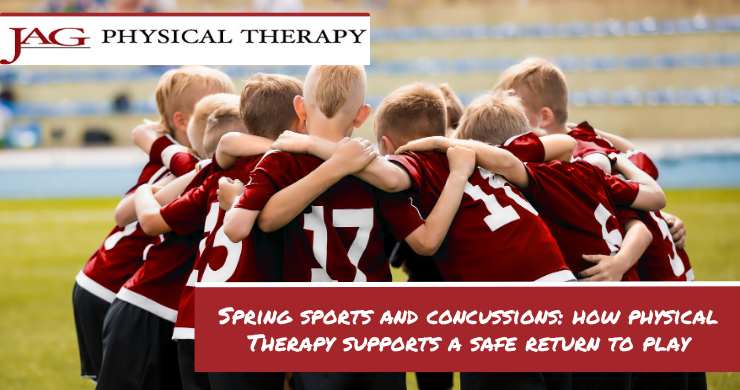
SPRING SPORTS AND CONCUSSIONS: HOW PHYSICAL THERAPY SUPPORTS A SAFE RETURN TO PLAY
Yes, physical therapy helps athletes safely return to spring sports after a concussion by guiding recovery, managing symptoms, and progressing activity in a controlled, step by step way.
As spring sports resume, concussion risk rises. Returning too soon can delay recovery, so physical therapy bridges the gap between rest and full play by safely reintroducing movement.
How physical therapy supports recovery and return to play:
- Addresses dizziness, headaches, and visual disturbances
- Improves balance, coordination, and reaction time
- Uses vestibular therapy to retrain the brain and inner ear
- Introduces controlled, progressive exercise to test tolerance
- Guides sport specific movements before full return to competition
Key Takeaways:
- Physical therapy supports a safe, step by step return to play after a concussion
- Treatment focuses on symptom management and restoring balance, vision, and coordination
- Gradual progression helps prevent setbacks and reduce reinjury risk
- Athletes should only return to sports under guided supervision after full recovery
START GETTING BACK
THE LIFE YOU LOVE
Why Are Concussions Common in Spring Sports?
Concussions are common in spring sports because outdoor conditions and fast, contact-heavy play increase the chances of falls and head impacts.
Spring fields are often uneven, wet, or slippery, which raises the risk of tripping or losing balance. At the same time, many spring sports involve quick movements, sudden direction changes, and occasional contact.
Common contributing factors include:
- Unpredictable outdoor surfaces like mud, grass, or turf
- High-speed movements and rapid changes in direction
- Player contact or collisions
- Sport-specific risks like headers in soccer or slides in baseball and softball
What Is a Concussion and How Can It Affect Athletic Performance?
A concussion is a brain injury that disrupts normal brain function and can significantly impact athletic performance.
Symptoms can vary widely and do not always include loss of consciousness. Even less obvious symptoms can interfere with how an athlete moves, reacts, and competes.
Common symptoms include:
- Headaches, dizziness, and nausea
- Balance problems and slowed reaction time
- Vision issues such as light sensitivity or blurriness
- Fatigue and difficulty concentrating
In some cases, symptoms last longer and affect coordination, timing, and spatial awareness, making it harder to track a ball or react quickly during play.

Physical therapy supports a safe return to spring sports after a concussion by restoring function and guiding gradual recovery.
What Is Return to Play Physical Therapy?
Return to play physical therapy helps athletes safely rebuild strength, coordination, and confidence after a concussion.
This type of rehabilitation focuses on restoring movement and function while carefully monitoring symptoms. Programs are individualized based on the athlete’s sport, symptoms, and tolerance for activity.
How Does Physical Therapy Support a Safe Return to Sport?
Physical therapy supports recovery by using a gradual, structured approach that reintroduces activity without worsening symptoms.
Therapists track progress closely and adjust exercises to ensure safe advancement.
Key components of treatment include:
- Gradual increases in physical activity based on tolerance
- Balance and coordination retraining
- Vestibular therapy to address dizziness and stability
- Sport specific movement training
- Movement assessments to identify and correct deficits
This step by step progression helps reduce setbacks and prepares athletes for the demands of their sport.
What Can Athletes Expect During a Return to Play Program?
Athletes can expect a personalized program that starts with evaluation and progresses through carefully monitored activity levels.
A typical program includes:
- Initial assessment of symptoms, balance, and movement
- Ongoing adjustments based on recovery progress
- Collaboration with coaches, trainers, and families when appropriate
- Gradual return to sport specific drills and full participation
At JAG Physical Therapy, clinicians use evidence based methods to guide athletes through each stage of recovery while prioritizing long term health.
In some cases, symptoms last longer and affect coordination, timing, and spatial awareness, making it harder to track a ball or react quickly during play.
Why Choose JAG Physical Therapy for Return to Play Care?
With over 160 locations around the NJ-NY-PA region, JAG PT provides high-quality care close to home for athletes at all levels. Our comprehensive outpatient care is delivered by highly skilled physical therapists with extensive sports medicine experience and training in specialized PT modalities. The integrated approach we use combines sports rehabilitation, specific treatments for individual injuries, orthopedic methods, post-operative care, and more as needed so that our patients can achieve their best results. Book an appointment now to take your first steps to returning to sports after a concussion or other major injury.
Visit JAG Physical Therapy for more details or simply contact us. You can book an appointment for an evaluation here.
Spring Sports & Concussions (FAQ)
How Do I Know If I Have a Concussion After a Spring Sports Injury?
Common signs include headaches, dizziness, nausea, balance issues, and trouble concentrating after a hit or fall.
When Can an Athlete Safely Return to Play After a Concussion?
An athlete should only return once symptoms have fully resolved and they’ve progressed through a supervised, step-by-step rehab program.
Can I Make My Concussion Worse If I Return to Sport Too Soon?
Yes, returning to sport too soon after a concussion can worsen symptoms and significantly increase the risk of a second, more serious brain injury, so athletes should only resume play after being fully cleared by a healthcare professional.
Learn More About Spring Sports Care at JAG PT





START GETTING BACK
THE LIFE YOU LOVE