
COMMON CAUSES OF MENISCUS TEARS
Knee pain could make daily activities difficult, whether you’re an athlete, an active adult, or just going about your everyday routine. One of the most common knee injuries is a meniscus tear. It is important to understand your injury in order to handle it with care.
What is the meniscus?
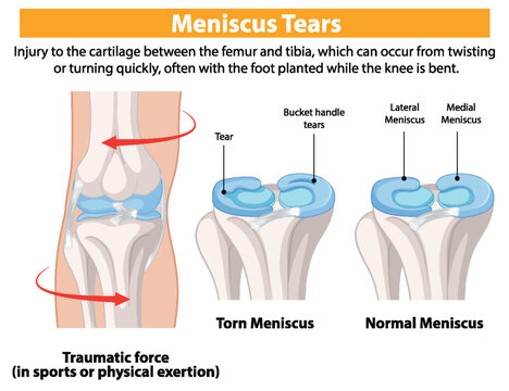
The meniscus is the c-shaped piece of cartilage that protects your knee joint. It acts as a cushion and stabilizer for your knee. Within each knee, there is both a lateral (outer) and medial (inner) meniscus. The meniscus helps absorb shock and reduce the impact on the knees. When the meniscus becomes damaged, it can lead to pain, swelling, and limited mobility. Understanding common causes will help you reduce the risk of this injury, as well as detect when it may be time to seek medical help.
What is a meniscus tear?
A meniscus tear occurs when the cartilage is stretched or torn, often as a result of sudden movements or wear and tear over time. A torn meniscus feels like a sharp pain along the knee joint, often accompanied by a ‘popping’ feeling at the time of injury and mechanical issues such as locking or buckling. The joint may become swollen and feel stiff or tight. Because of this, it becomes difficult to fully bend or straighten the knee. Meniscus tears can happen to anyone; it is a very common injury and can occur in many ways.
How do meniscus tears occur?
- Twisting or pivoting the knee: One of the most common causes of a meniscus tear is twisting or pivoting the knee. This looks like a sudden twist of the knee while the foot is planted. The force placed on the cartilage as this happens often causes a tear. This can happen during everyday activities like stepping awkwardly, turning quickly, or changing direction while walking. This way of injury is very common in sports like soccer, basketball, football, and tennis.
- Deep squatting and heavy lifting: Deep squats, kneeling, rising from a squat, and lifting heavy objects place extra stress on the meniscus. Deep squatting places significant stress on the meniscus, especially when combined with twisting. Similarly, lifting heavy objects with rotation causes significant risk to the meniscus
- Sports movements: Athletes are at a high risk of meniscus tears due to the quick movements and high stress placed on their knees. Movements like jumping, changing direction, stopping short, and landing awkwardly can cause injury to the meniscus. In many cases, meniscus tears occur alongside other injuries, such as ligament damage.
- Direct impact to the knee: Falls, collisions, or accidents that directly impact the knee can cause injury. A direct hit to the knee during sports, a motor vehicle accident, or a fall can place enough force to cause a meniscus to tear. These types of injuries are usually accompanied by immediate swelling, pain, and trouble moving.
- Aging wear and tear: Not all meniscus tears are done by a specific injury. As people age, their meniscus becomes less flexible, weaker, and is more prone to tearing during everyday activities. These are known as degenerative meniscus tears. For older adults, their cartilage may be weakened, so movements like standing up from a chair, squatting, or going down the stairs may be enough to cause a tear.
What are risk factors for a meniscus tear?
- Participation in sports
- Age-related degeneration
- Previous knee injuries
- Jobs that require repetitive bending or squatting
- Excess body weight
Prevention tips:
- Proper warm-up before sport and exercise
- Gradual increase in exercise intensity
- Maintain a healthy body weight
- Improve flexibility
- Strengthen hips, hamstrings, and calves
Exercises to prevent meniscus tear:
- Straight leg raises
- Mini squats
- Step ups
- Hamstring curls
- Single leg balance
Injury symptoms to look out for:
- Knee pain
- Swelling/ stiffness
- Locking or buckling
- Popping sensation at time of injury
- Difficulty bending or straightening
- Feeling that the knee may give out
When to see a doctor:
If you have persistent knee pain, swelling, and trouble moving your knee. It is important to seek medical advice, as early diagnosis and treatment can help prevent any further damage to the knee. Your healthcare provider will test your knee with a physical examination first. By testing your swelling, range of motion, and pain when doing certain movements. After your initial meeting with a healthcare provider, they may send you in for an x-ray and/or magnetic resonance imaging (MRI) test.
Conclusion
Meniscus tears are a common, but painful injury. A meniscus tear could occur from twisting the knee, deep squatting, sports, direct impact, or wear and tear over time. It is important to understand risk factors, causes, and symptoms in order to reduce the risk of a meniscus tear. Now that you can identify a meniscus tear, be sure to seek medical attention when needed. Knee pain isn’t fun; it makes daily activities more difficult, so do your best to prevent injury before it occurs.
START GETTING BACK
THE LIFE YOU LOVE


