
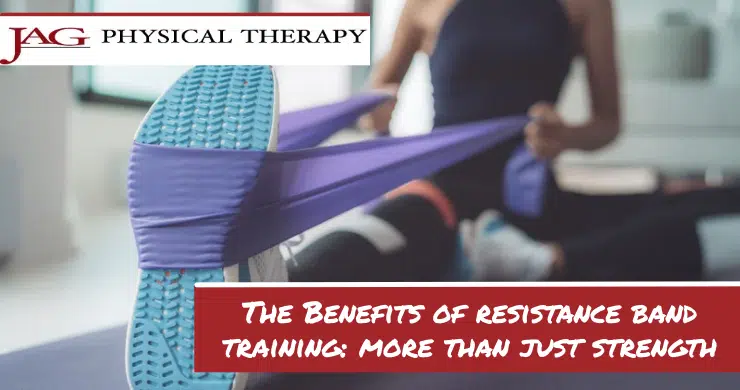
THE BENEFITS OF RESISTANCE BAND TRAINING: MORE THAN JUST STRENGTH
Resistance band training is one of the most versatile and effective ways to develop strength, improve movement quality, and enhance overall physical performance. Although resistance bands are sometimes viewed as a secondary training tool, they offer unique biomechanical advantages that traditional free weights and machines cannot always replicate. From accommodating resistance and force vectors to ground reaction forces and adaptable loading patterns, resistance bands provide an effective approach to strength and conditioning for athletes, fitness enthusiasts, and individuals participating in rehabilitation.
1. Accommodating Resistance: Strength Through the Entire Range of Motion
One of the biggest advantages of resistance band training is accommodating resistance. Unlike traditional weights, where the external load remains relatively constant throughout an exercise, resistance bands progressively increase tension as they are stretched. This means resistance generally increases as the band elongates, creating an ascending resistance profile. Depending on the exercise and band configuration, this loading pattern can complement the body’s natural strength curve by increasing resistance through different portions of the range of motion. For example, during a banded squat or chest press, resistance typically becomes greater toward the end of the movement. This allows individuals to challenge their muscles throughout different portions of the range of motion while developing strength and control.
2. Force Production and Ground Reaction Forces
Resistance band training can also be used to improve force production and the body’s ability to interact with the ground. During standing exercises, individuals must generate force against the resistance of the band while maintaining contact with the ground and managing the resulting ground reaction forces through the feet. These interactions require coordination and stabilization across the kinetic chain, including the ankles, knees, hips, and trunk. Exercises such as banded squats, resisted lateral walks, and standing presses encourage individuals to maintain stability while producing force. This can help develop strength, balance, and movement control that carry over to athletic and functional activities.
3. Understanding Force Vectors and Movement Patterns
Another unique benefit of resistance bands is the ability to manipulate force vectors. Because bands can be anchored from virtually any direction, resistance can be applied horizontally, vertically, diagonally, or rotationally. This allows exercises to challenge the body in multiple planes of motion. For example, a resistance band can provide rotational resistance during a standing press, lateral resistance during walking exercises, or horizontal resistance during resisted sprinting drills. By changing the direction of the applied force, trainers and clinicians can create exercises that more closely resemble the directional and movement demands of sport-specific activities and everyday movements.
4. Joint-Friendly Resistance and Movement
Resistance bands offer an adaptable alternative to some traditional resistance exercises. Their elastic properties allow resistance to be adjusted through band selection, elongation, and positioning, providing opportunities to modify loading based on individual capabilities and exercise goals. This can make them particularly useful for individuals returning from injury, older adults, or those looking to maintain strength while managing exercise-related joint stress. Bands also allow for controlled movements, adjustable resistance, and a wide variety of exercise modifications. While no resistance method is completely stress-free, bands offer an opportunity to build strength with manageable loading and greater flexibility in exercise selection. It is important to recognize that resistance bands are not inherently lower-load or easier on the joints; appropriate resistance selection and exercise progression remain essential.
5. Versatility, Accessibility, and Functional Strength
Perhaps the greatest advantage of resistance bands is their versatility. They are lightweight, portable, relatively inexpensive, and can be used virtually anywhere. A single band can be incorporated into compound exercises that combine multiple movements, such as a squat with an overhead press or a lunge with a row. These combinations challenge multiple muscle groups while requiring coordination, balance, and core stability. Resistance bands can also be used for traditional strength training, athletic performance, mobility, and rehabilitation. Their adaptability allows clinicians and fitness professionals to modify exercises based on an individual’s strength, functional capacity, and training goals.
The Bottom Line
Resistance bands are much more than a convenient alternative to dumbbells and machines. They provide a unique training stimulus through accommodating resistance, allow for manipulation of force vectors, challenge force production and postural stability, and offer adaptable loading options that can be tailored to individual needs. Whether the goal is to improve athletic performance, build muscle, enhance functional movement, or support rehabilitation, resistance bands deserve a place in a well-rounded strength and conditioning program. Their simplicity may be deceiving, but when used correctly, they can deliver tremendous training benefits.
START GETTING BACK
THE LIFE YOU LOVE


