
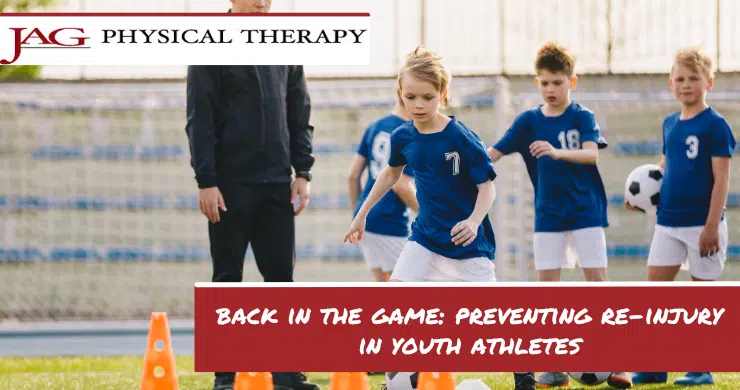
BACK IN THE GAME: PREVENTING RE-INJURY IN YOUTH ATHLETES
- Focus: Return-to-play guidance, mental resilience, and building injury-safe habits during the fall season.
For soccer lovers, it isn’t just a childhood pastime; it’s a lifelong passion. Soccer doesn’t just live in our memories – it lives in our muscles, instincts, and hearts. Whether you’re an adult rediscovering the thrill of the game, or a young player eager to reclaim your spot after an injury, getting back on the field promises adrenaline and joy, but also hidden risks that can sideline you again if you’re not prepared. Before you lace up your cleats, here’s what you need to know to return stronger and stay in the game.
A Sport for All Ages Comes with Challenges
The accessibility of soccer is one of its greatest strengths. From teenagers to retirees, the game welcomes players at every stage of life. Youth soccer, especially among players aged 18–34, continues to thrive, while those aged 55–64 and those 65 and older are returning in substantial numbers to adult recreational leagues.
Athletes, young and old, can face challenges when returning to the game. The sport of soccer demands quick bursts of speed, sharp cuts, sudden stops, and constant changes in direction, all of which put a strain on the joints, muscles, and tendons. These movements, if approached without proper conditioning, can lead to injury or re-injury. If an older athlete sustained a common injury during their younger player years such as an ACL tear, ankle sprain, or muscle strain, they are susceptible to re-injuring that area if they are not appropriately educated on how to properly condition and strengthen, ultimately working to prevent recurrence.
Preventing Re-Injury: How To Return Safely
Coming back to soccer after time away is exciting, but jumping in too fast can undo all the progress you’ve made. To stay healthy and avoid setbacks, it’s essential to lay the groundwork before you step onto the field.
Here’s what experts recommend:
Medical Clearance First
After a significant injury, players must undergo a thorough medical examination. Understanding your current fitness level, joint and muscle health, and any lingering instability can guide you in the right direction for your comeback era.
Progressive Conditioning
Youth athletes should avoid returning to full-speed drills. The athlete must gradually progress back into soccer, building an aerobic base, strengthening and stabilizing muscles, and retraining agility.
Target Weak Points
Soccer players are prone to injuries in specific areas, such as the knees, ankles, and hamstrings. Focused strength and stability training can protect these vulnerable areas and reduce the risk of re-injury.
Flexibility and Mobility Work
For soccer players, a tight muscle can be a ticking time bomb, ready to explode at any moment. In response to the demands of the game, athletes should incorporate dynamic stretching and mobility routines to help keep their bodies agile and resilient.
Youth Soccer: A Special Focus on Injury Prevention
Young athletes are particularly susceptible to returning too soon after an injury, driven by the desire to compete, but also from lack of education on the matter. Coaches, parents, and trainers must emphasize a return-to-play protocol that prioritizes long-term health over short-term performance.
- Education: Youth players need to understand the risks of re-injury and the importance of following recovery guidelines.
- Proper Warm-Ups: Programs like FIFA 11+ have been shown to significantly reduce injury risk by preparing the body for high-intensity movements.
- Load Management: Monitoring total activity — including games, practices, and strength training — ensures that young athletes aren’t overtraining, thereby reducing their risk of injury.
Soccer for a Lifetime - When Done Right
Soccer offers incredible physical, mental, and social benefits that can be enjoyed well into later life. However, those benefits hinge on one key element: maintaining good health. Whether you’re a teenager eager to rejoin your club team after an ACL recovery or an adult dusting off your cleats after years away from the field, a smart, gradual return can make all the difference.
With proper preparation, patience, and injury prevention strategies, soccer can remain a safe, thrilling part of life, no matter when you return to the game.
START GETTING BACK
THE LIFE YOU LOVE


