
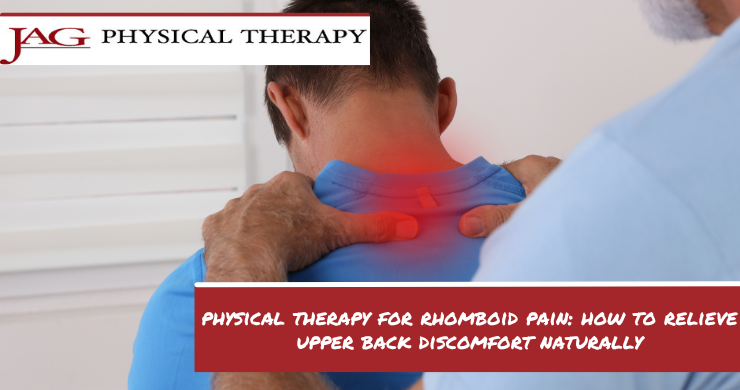
PHYSICAL THERAPY FOR RHOMBOID PAIN: HOW TO RELIEVE UPPER BACK DISCOMFORT NATURALLY
The rhomboid muscles sit between the shoulder blades and play a major role in upper back stability, posture, and shoulder movement. When these muscles become strained or irritated, even simple movements like reaching, lifting, or sitting upright can become uncomfortable. Over time, untreated rhomboid pain can also contribute to poor posture and compensatory strain in other areas of the body.
Physical therapy is one of the most effective non-invasive approaches for treating rhomboid pain. By improving muscle balance, restoring mobility, and correcting posture, PT helps reduce discomfort while addressing the underlying cause of the issue.
At JAG Physical Therapy, patients receive personalized treatment plans designed to relieve upper back pain, improve shoulder function, and restore healthy movement patterns through targeted exercise and hands-on care.
In this guide, we’ll cover:
- What causes rhomboid pain
- How it affects daily movement and function
- How physical therapy helps relieve symptoms
- Common PT exercises and techniques used
- Who benefits most from treatment
- What to expect during evaluation
- Why JAG Physical Therapy is a trusted choice
What Causes Rhomboid Muscle Pain?
Rhomboid pain can develop for a variety of reasons, often related to posture, repetitive movement, or muscle overload.
Common Causes of Rhomboid Strain
- Prolonged sitting with poor posture (especially desk work)
- Repetitive overhead movements (sports like tennis or swimming)
- Lifting or carrying heavy objects incorrectly
- Muscle tension related to stress or fatigue
Why It Develops Over Time
Many cases build gradually rather than occurring from a single injury. Small posture imbalances or repetitive strain can slowly irritate the muscles, leading to tightness, discomfort, and reduced shoulder mobility.
learn more about
exercises to improve your posture
How Does Rhomboid Pain Affect Daily Life?
Because the rhomboids support shoulder movement and posture, pain in this area can impact a wide range of everyday activities.
Common Functional Limitations
- Difficulty reaching overhead or behind the back
- Pain when typing, writing, or using a computer
- Discomfort while driving or turning the steering wheel
- Struggles with lifting or carrying objects
- Reduced performance in sports and physical activity
Posture and Compensatory Strain
When the rhomboids are not functioning properly, the body often compensates by overusing surrounding muscles. This can lead to additional tightness or pain in the neck, shoulders, or mid-back.
What Is Physical Therapy for Rhomboid Pain?
Physical therapy takes a comprehensive approach to treating rhomboid pain by addressing both symptoms and underlying movement dysfunction.
Core Goals of Treatment
- Reduce pain and muscle tension
- Restore normal shoulder blade movement
- Improve posture and spinal alignment
- Strengthen supporting muscles
- Prevent recurrence of injury
Education as a Key Component
A major part of treatment involves helping patients recognize and correct poor posture habits. Learning how to maintain proper alignment throughout the day plays a critical role in long-term recovery.
What Types of Physical Therapy Rhomboid Exercises are Commonly Used?
While every treatment plan is individualized, most patients will perform a combination of targeted strengthening, mobility work, and postural training.
Scapular Strengthening and Control
- Shoulder blade squeezes (scapular retraction)
- Controlled movement exercises to restore alignment
Resistance and Strength Training
- Resistance band rows
- Light weighted pulling exercises to build endurance
Mobility and Flexibility Work
- Thoracic spine stretching
- Upper back mobility exercises to improve posture
Core Stability Training
Strengthening the core helps provide a stable foundation for upper back function, improving overall posture and reducing strain on the rhomboids.
learn more about
neck strengthening exercises for athletes
Who Can Benefit From Physical Therapy for Rhomboid Pain?
Rhomboid pain can affect a wide range of individuals, especially those who perform repetitive movements or maintain static postures for long periods.
Higher-Risk Groups
- Office workers and students sitting for extended hours
- Athletes using repetitive upper body motion (tennis, baseball, swimming)
- Individuals with chronic postural imbalances
- Older adults experiencing age-related muscle and joint changes
When PT Is Most Beneficial
Physical therapy is especially helpful for individuals experiencing:
- Persistent upper back tightness or discomfort
- Pain with movement or posture changes
- Reduced shoulder mobility or strength
What Can Patients Expect During a Rhomboid Physical Therapy Evaluation?
At JAG Physical Therapy, we begin each course of PT with a rigorous evaluation, and in the case of rhomboid pain, the number of potential factors that could cause symptoms make it especially important. When a patient has their first appointment, our therapists evaluate their posture, test their shoulder and upper back strength and range of motion, and analyze their movement patterns.
The patient’s description of their symptoms and medical history are also important, as are their lifestyle needs such as their job and any sports they may play. All of these are taken into account to plan the patient’s personalized rehabilitation routine, including their progressive exercise regimen. Our therapists update each patient’s exercise program as needed and offer educational support in order to make sure healing continues in the optimal way and help prevent recurrence.
Why Choose JAG Physical Therapy for Rhomboid Pain Rehabilitation?
With over 160 locations in the New Jersey, New York, and Pennsylvania area, JAG PT proudly offers residents of the region high-quality, evidence-based physical therapy care close to home. Our experienced therapists are trained in upper body rehabilitation, sports medicine, and various specialized modalities, allowing them to create a customized course of treatment that is ideal for each individual patient. Our comprehensive outpatient PT care for all ages helps people recover from shoulder injuries and other conditions and return to their normal routines each day. Schedule an appointment now and take the first step to better upper body movement and posture through rhomboid-focused physical therapy.
START GETTING BACK
THE LIFE YOU LOVE
Rhomboid Pain (FAQ)
How long does rhomboid pain take to heal with physical therapy?
Recovery varies, but many patients begin noticing improvement within a few weeks of consistent treatment.
Can rhomboid pain go away on its own?
Mild cases may improve, but physical therapy helps address underlying causes and reduces the risk of recurrence.
Is rhomboid pain related to posture?
Yes, poor posture is one of the most common contributing factors to rhomboid strain and discomfort.
What should I avoid if I have rhomboid pain?
Avoid prolonged slouching, heavy lifting without proper form, and repetitive strain without rest or correction.
Can I still exercise with rhomboid pain?
Yes, but exercises should be modified and guided to avoid worsening symptoms and support proper healing.


