

POST CONCUSSION CARE: RECOGNIZING A CONCUSSION AND KNOWING WHAT TO DO NEXT
Every athletic trainer has seen it happen. An athlete takes a hard hit, pops back up, insists they’re “good to go,” and wants back into the game before anyone has a chance to ask a second question. Sometimes they’re telling the truth. Sometimes, fifteen minutes later, they can’t remember the score, they’re unusually emotional, or a pounding headache sets in on the bus ride home.
That’s what makes concussion recognition uniquely challenging: no two concussions present exactly alike, and symptoms can evolve over minutes or hours. This guide covers what to watch for, what to do the moment a concussion is suspected, and why reporting it — every time — matters.
Throughout this guide, you’ll also find JAG PT’s downloadable quick-reference flyer, designed for athletic training rooms, sidelines, and clinical rotations. Even if you are a DPT or AT student, it’s worth saving before your next rotation.
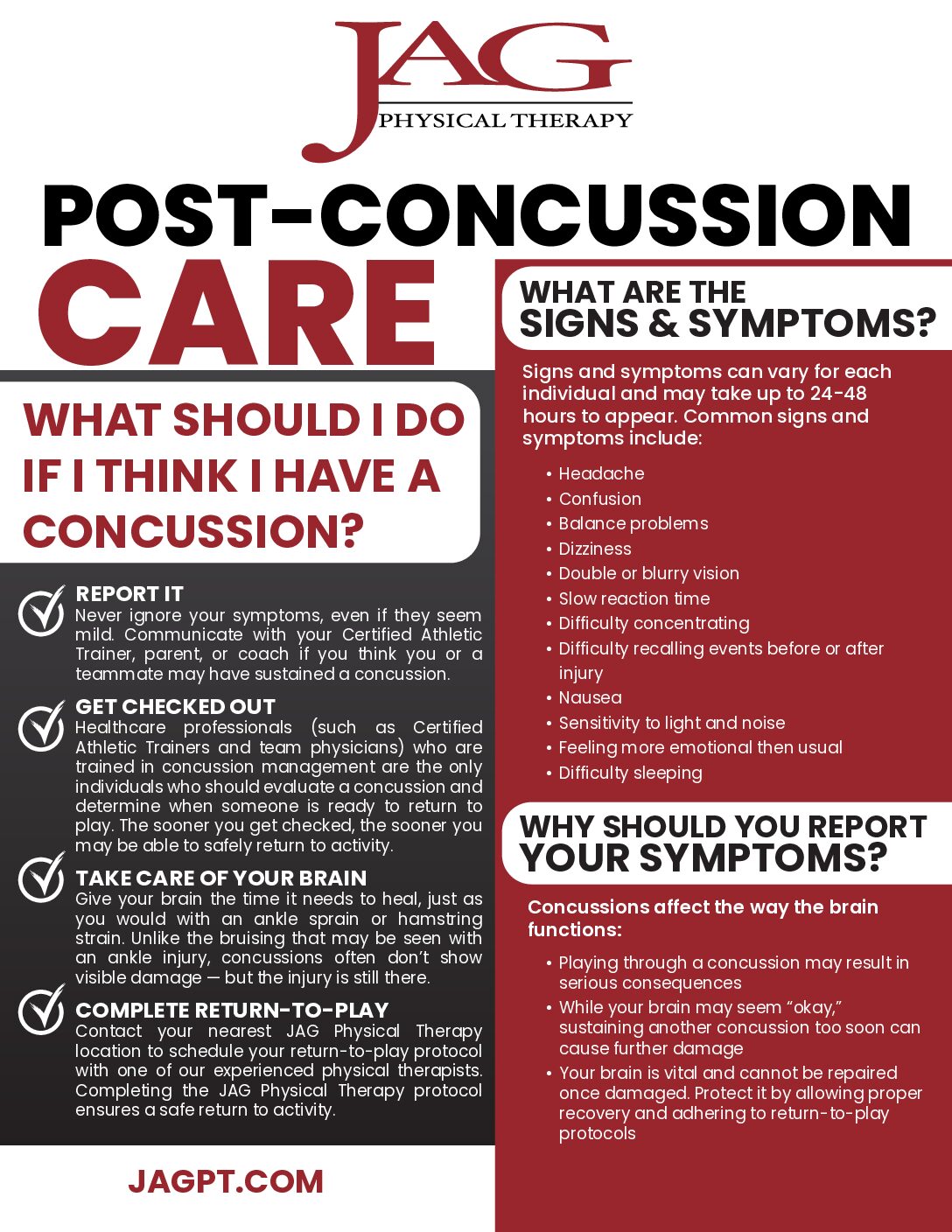
ACCESS JAG PT POST-CONCUSSION CARE GUIDE
Signs and Symptoms of Concussions
There isn’t one universal concussion presentation. Some athletes stumble off the field holding their head. Others carry on a normal conversation before symptoms surface. A systematic check across categories catches more than waiting for any single “obvious” sign.
| Category | Signs and Symptoms |
|---|---|
| Physical | Headache, pressure in the head, nausea, vomiting, balance problems, visual disturbance, sensitivity to light or noise, fatigue |
| Cognitive | Feeling mentally foggy, slowed processing, difficulty concentrating, feeling “not right,” confusion, amnesia for the event |
| Emotional/Behavioral | Irritability, sadness, emotional lability, anxiety, personality changes |
| Sleep | Sleeping more or less than usual, difficulty falling asleep, drowsiness |
| Observable Signs | Vacant or glassy stare, slowed verbal response, disorientation, unsteady gait, loss of consciousness (occurs in fewer than 10% of sport-related concussions) |
Red Flags Requiring Immediate Emergency Transport
Some findings shift attention immediately away from sideline assessment and toward emergency care:
- Repeated vomiting
- Seizure or convulsions
- Loss of consciousness lasting longer than one minute
- Worsening or severe headache
- Significant neck pain
- Focal neurological deficits — weakness, numbness, or speech changes
- Progressive confusion or deteriorating mental status
When any of these are present, emergency transport takes priority over continued sideline assessment.
What to Do If You Think You Have a Concussion
The most important decision isn’t which assessment tool to use — it’s making sure the athlete does not return to play that day.
- Remove the athlete from play immediately if a concussion is suspected. When in doubt, sit them out.
- Screen for red flags that require immediate emergency transport.
- Notify parents or guardians before a minor leaves the facility.
- Provide written discharge instructions covering symptom monitoring and when emergency evaluation is necessary.
- Document according to your institutional policy and applicable state concussion laws in your state of practice
Same-day return to practice or competition is contraindicated, even if symptoms seem to improve within minutes. A concussion is a functional brain injury — the absence of obvious symptoms right after impact doesn’t mean the brain has recovered.
Why Reporting a Concussion Matters
One of the biggest challenges isn’t recognizing obvious concussions — it’s recognizing the quiet ones. Athletes frequently underreport symptoms because they don’t want to lose playing time, let down teammates, or miss an important game. That’s why clinicians, coaches, and teammates can’t rely solely on the athlete’s answer to “how do you feel?”
Encouraging athletes to report symptoms honestly — and training coaches and teammates to speak up when something looks off — is often what turns a missed concussion into an early, safely managed one.
Concussion Recognition Is a Team Effort
A coach notices an athlete isn’t acting like themselves. A teammate mentions they seemed “out of it.” An athletic trainer removes them from play despite protests. Parents monitor symptoms overnight. Each of those moments depends on someone recognizing the signs and being willing to report them.
At JAG Physical Therapy, certified athletic trainers and physical therapists across more than 160 locations throughout New York, New Jersey, and Pennsylvania support this recognition-to-referral process every day. Save the flyer above for quick reference in the athletic training room, on the sideline, or during your next clinical rotation.
EXPLORE CLINICAL OPPORTUNITIES AT JAG PT
START GETTING BACK
THE LIFE YOU LOVE